Thirteen young artists opened a physical pop-up store in Bremen — and discover that collaboration, not profit, may be their most valuable outcome.
by Wang Yuran
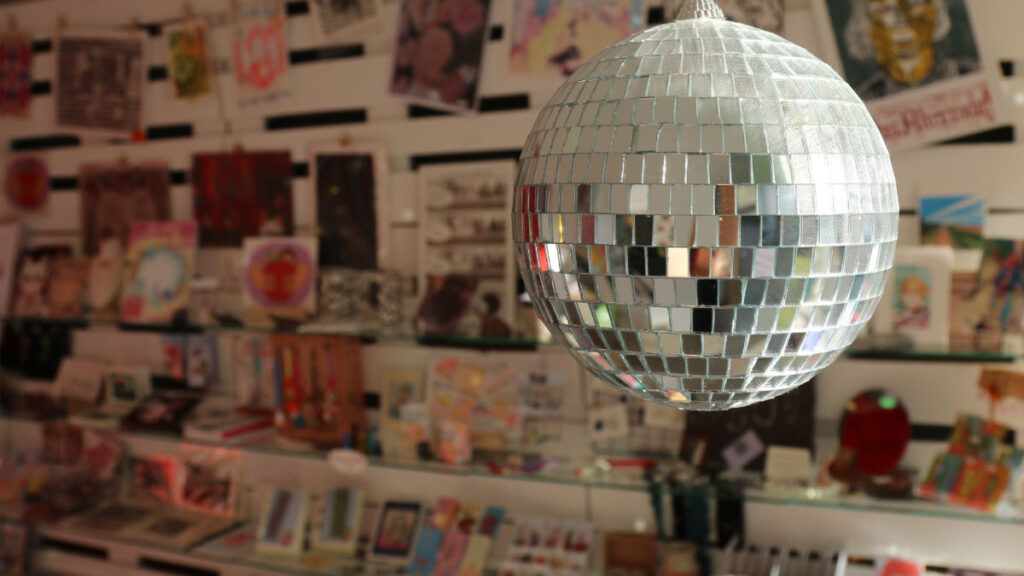
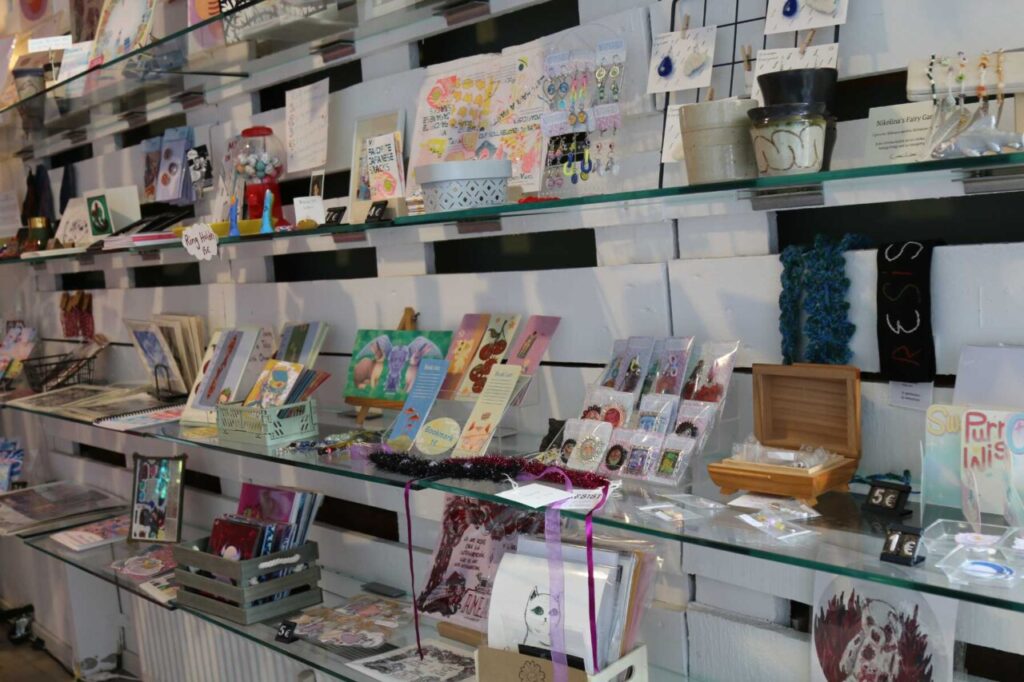
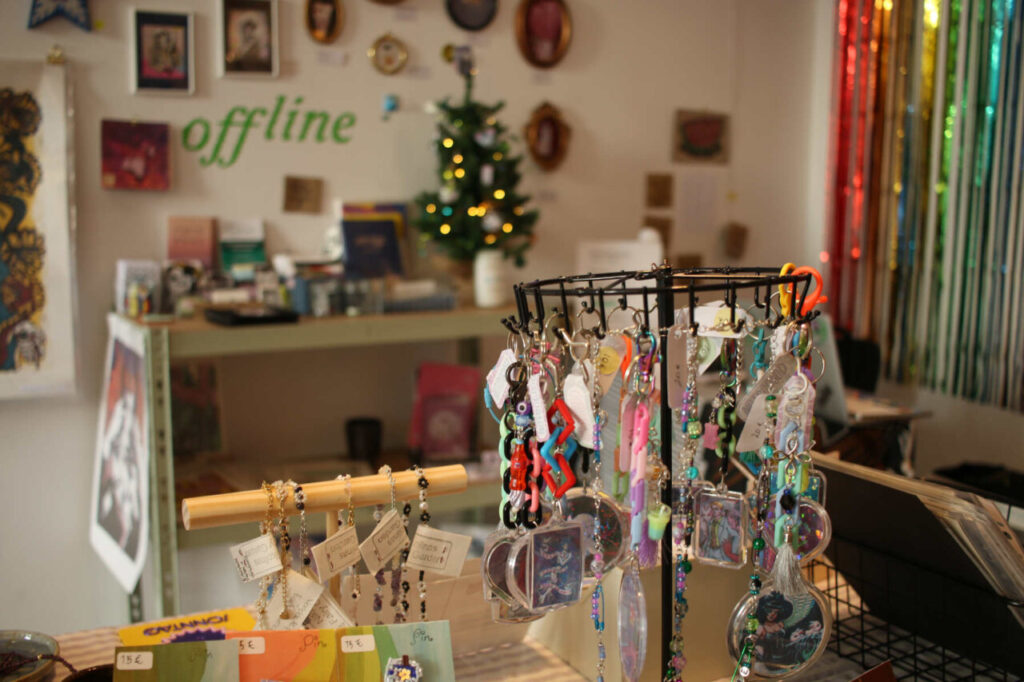
It was a quiet afternoon on Steintor Street in Bremen, sunlight poured through the front window of a small shop, scattering reflections from a hanging disco ball. Inside, metal sculptures, ceramic bowls, printed illustrations and handmade crafts were arranged on shelves and tables, each created by different artists.
Behind the counter sat Mushexi, one of the artists taking her shift for the day.
The shop had opened only recently, and weekday traffic was slow. Still, she remained optimistic. “Our real target customers are people looking for gifts during Christmas,” she said. “It should be very busy before Christmas Eve.”
The shop operated for only two months. Yet for the thirteen young artists who opened it together, the pop-up store—half jokingly called “Broke Artists Shop”—became much more than a retail experiment.
“Of course, we wanted to make money,” Mushexi said honestly. “But I’ve always wanted to open a workshop or an art shop and I also felt it was important to do something together with my friends.”
So when Melis, the initiator of the project, found this affordable space and suggested opening a shop together, Mushexi joined without hesitation.
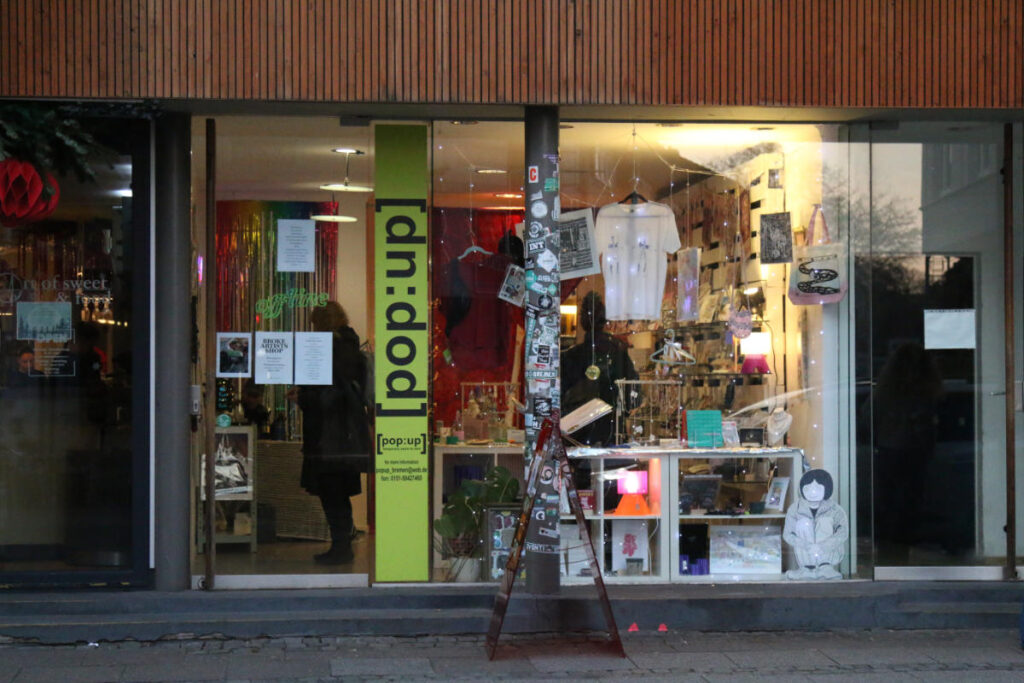
A collective decision
Before launching the shop, most of the artists had experimented with selling their work individually—through art markets, online platforms, or social media. Only Melis had previous experience running a physical store, and none of them had tried managing one collectively.
Opening a shop involves real financial risk. Rent, utilities, and maintenance costs can quickly exceed what many emerging artists can afford alone. But divided among more than a dozen people, the expense suddenly became manageable.
The collective model also brought unexpected advantages. Works by different artists were displayed together, creating a visually dynamic space that attracted passersby. Visitors who entered for one artist’s work often discovered others.
Beyond shared ideals, the collaboration became a practical strategy for risk management.
Artist collectives are not a new phenomenon. In cities such as New York, groups like the Frontrunner Collective began as informal collaborations among friends before evolving into shared gallery and studio spaces. Artist-run venues have long provided alternatives to commercial galleries, allowing creators to maintain greater control over their work while sharing resources.
For many emerging artists, collaboration offers opportunities that would otherwise be difficult to achieve alone. Collectives can expand audiences, share financial burdens, and create exhibition platforms outside traditional institutional structures.
Still, collective management has its challenges.
“There are always practical issues—shift scheduling, staffing, accounting,” Mushexi said. “But overall, it works surprisingly well.” Each artist tracks their own sales separately, while shop duties rotate. “Sometimes someone is late for a shift,” she added, “but everyone is very proactive. If someone can’t come, others step in.”
Why choose a physical space?
In an era dominated by digital marketplaces, the decision to open a physical shop inevitably raises questions. Online platforms operate around the clock. Social media can reach global audiences instantly. Why invest in rent, opening hours, and the uncertainty of foot traffic?
For many artists in the shop, the answer lies precisely in what the online mode lacks.
One illustrator, whose primary audience exists online, explained that she values the moments that occur only in physical spaces. “I want to see people hesitate before buying,” she said. “I want to see them hold the work and tell me what they notice first.”
Physical stores slow things down. They allow visitors to touch materials, observe textures, and engage in conversation with the artist. In a digital environment where creative work is increasingly optimized for algorithms, engagement metrics, and rapid scrolling, choosing a physical space can even carry a subtle political message: visibility does not necessarily equal value.
Melis’s personal brand, Resistance, reflects that philosophy. Her work promotes environmental awareness and sustainable production while rejecting fast-fashion aesthetics.
“Some handcrafted items simply don’t translate well online,” Mushexi explained. “You need to experience them in person. The atmosphere of a physical store is powerful.”
Despite the perception that art rarely sells, the shop performed better than expected. Many of the artists had previously sold work at local art markets, where even small daily earnings added up. The shop exceeded those modest expectations.
“Each artist earned about 500 to 800 euros on average, and the highest reached around 1,500 euros,” Mushexi said.
Operating online, she noted, also involves hidden costs. “People often think online stores are cheap, but you need to pay for promotion, advertising, and platform visibility. It’s not as low-cost as people imagine.”
Running a physical shop in a smaller city like Bremen can still be challenging. Yet small cities also offer advantages. The artistic environment is more liberal. Meanwhile cultural policies in Bremen include financial support for student cultural projects and exhibitions, while programs such as the Bremen Studio Grant provide studio spaces and stipends to help emerging artists establish their careers.
The multiple identities of artists
Mushexi does not describe herself simply as an artist.
“My interest in business is actually stronger than my interest in pure artistic expression,” she admitted. “Opening this shop gave me valuable management experience. That will be very important for my future career.”
Her perspective reflects a broader reality facing many young artists today. In an increasingly digital and competitive cultural economy, creative work alone rarely guarantees financial stability.
Although some artists remain uneasy about commercialization, the branding and marketing of art have become difficult to avoid. Reports from organizations such as UNESCO and the European Commission suggest that many contemporary artists now operate much like independent entrepreneurs. They must not only create but also promote, distribute, and finance their work.
Modern artists often move fluidly between roles: creator, marketer, entrepreneur, and community organizer. Managing an artistic career may require understanding logistics, pricing strategies, audience engagement, and brand identity.
In this sense, artistic identity is no longer defined solely by the work itself but also by how that work circulates in the world.
Still, the artists involved in the shop remain cautious about reducing art to mere commodities. “Art certainly needs packaging, and marketing is important,” Mushexi said. “But it has to stay authentic. The attitude you take determines the kind of people you attract.”
For many creators, the central challenge lies in balancing economic survival with artistic integrity—ensuring that financial success does not dilute the meaning behind the work.
More than a shop
Business at the shop fluctuated. Some days were quiet, others unexpectedly lively.
Occasionally a visitor would enter, look around, and say: “This is so special. I’ve never seen a shop like this.”
For the artists, those moments mattered.
The space gradually became more than a retail venue. It evolved into a meeting point where artists and visitors could interact directly—where digital audiences briefly became physical ones.
“What moves me most,” Mushexi said, “is the friendship we built through this experience.”
The artists shared responsibility, covered shifts for one another, and confronted the uncertainties of running a shop together.
“We support each other,” she said. “Sometimes I’m amazed that there are such wonderful people in the world.”
The project brought thirteen individuals into a collaborative environment without rigid hierarchy. Decisions were negotiated collectively, and each participant contributed in their own way.
For a generation accustomed to carefully curating identities online, the shop offered something different: a space where relationships unfolded without filters.
“It’s messy,” Mushexi said. “It’s vulnerable. But it’s real.”
More than two months after the pop-up closed, she still feels a surge of emotion when passing the former shopfront.
With friendship as their only real guarantee, the artists chose to share responsibility and build something together. The shop may not resolve the deeper tensions between art and commerce. It may not escape the pressures of the market.
But for a brief moment, when the doors opened, thirteen young artists experimented with another possibility: a way of working—and living—side by side.
You might also like